

1. Name 3 yoga postures included in this Outlaw Yoga workout
2. After watching the dance video with closed captions, which movie appeals to you for its style of dance? OR, which movie displays the most athleticism, grace or creativity in it’s dance style?
3.Pick 2 of the following 3 questions and answer each question with 250-300 words. Submit one answer with 2 distinct paragraphs.
1) Refer to my lecture and the reading on Self Myfascial Release. What tools have you used before? What new tool did you try on what 3 areas? Explain. Per the NASM article, what specific benefit are you personally experiencing with SMR?
2) Fitball 101: Based on the 6 fitball stretches in Module 5 reading OR something new you make up or research which addresses your needs, write a paragraph about these 3 fitball stretches. Reference the anatomical names of the muscles you are stretching, (according to the muscular chart, Module 4) rand how this will serve your daily needs e.g. workouts, posture, work duties, etc.
3) Which of the bed stretches have you begun incorporating either before getting vertical or elsewhere? Reference which muscles you are using. Explain how this habit is impacting your muscle memory.
4.Reflect on the dance video you watched: If you’ve experienced the joy of dancing, share specifically in what context? As a workout? Social? Cultural? How does it feel on your body compared to traditional aerobic workouts? How would you encourage a complete neophyte to get started doing this? Of the many old movie stars in the video, who or which style of dance would you emulate, learn, if you could? Or is there a dfferent style you’d like to learn? Why? (There’s a link below the video to look up the stars and movies they are in) If you DON’T ever dance, dream a little: Which style of dance would you be graced with if possible? Have you considered learning it? Do you see any value in dance either socially, culturally or as a workout? Why, why not? In 50-75 words share your response, or why you agree or (politley) disagree with someone else’s response. Support your response with your personal experience.
Flexibility and Lower Back Fitness
In yoga there’s a saying, “You are only as young as your spine.” When you have a supple spine, you have an ease or freedom of movement throughout your body that ameliorates aches and injuries. This range of motion (ROM) is flexibility. The word is derived from the Latin flectere or flexibilis, which means “to bend.” Stretching reminds you what your joints, muscles and tendons are capable of, what they are designed to do when not in a tight static posture. Yoga classes have become ubiquitous in the past couple of decades. If your schedule can accommodate this, wonderful. But flexibility training isn’t all or nothing nor does it have to last for an hour. Something in small doses, several times a day can keep you from experiencing injury and pain. Set your timer at your computer to stand every 30 minutes and stretch. Follow your cardio or strength training with some foam rolling and stretching. And try this: begin your day with some bed stretches, to set your intention for the day and prepare your body to be upright. Incorporating small habits like this will imbed your muscle memory and chances are you’re more likely to incorporate stretch breaks throughout your day!
Bed Stretches
Emphasize exhalation into each of these stretches several times.
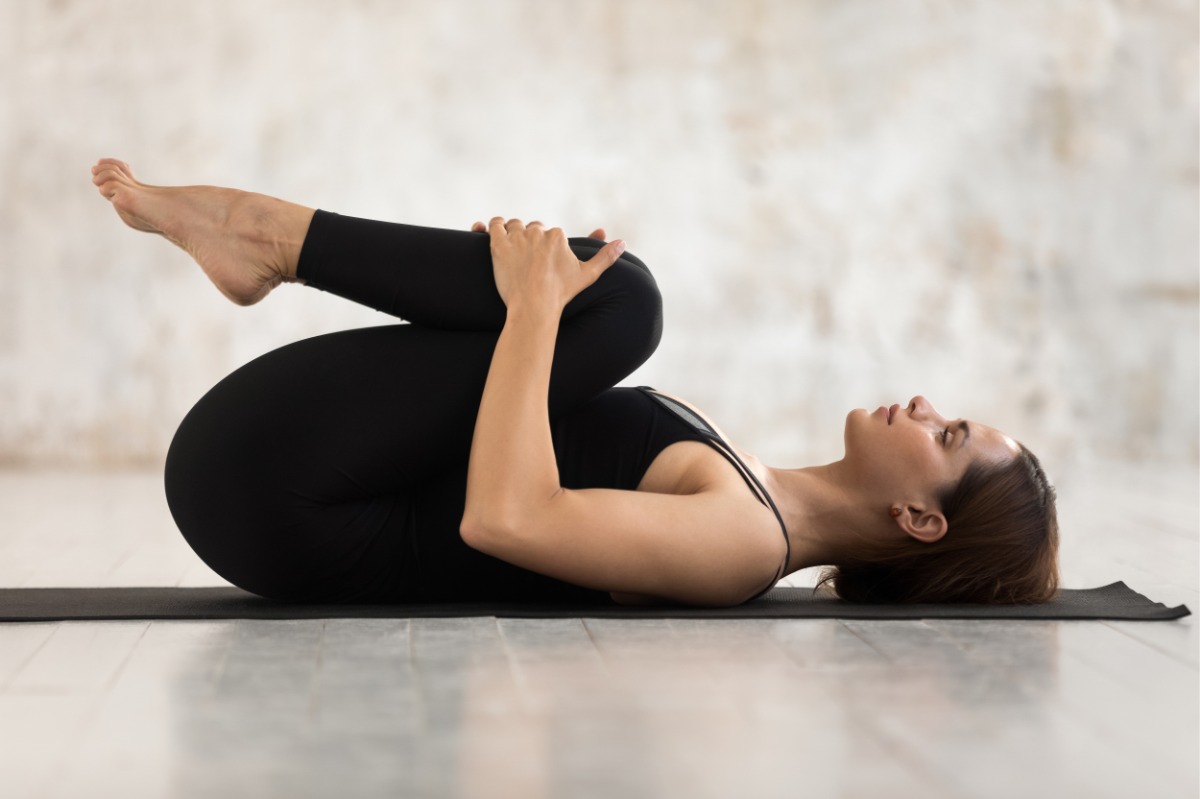
Lower back: Lying on your back, pull knees to your chest. With hands on or under knees, circle knees slowly clockwise, then counterclockwise in both directions, massaging lower back.
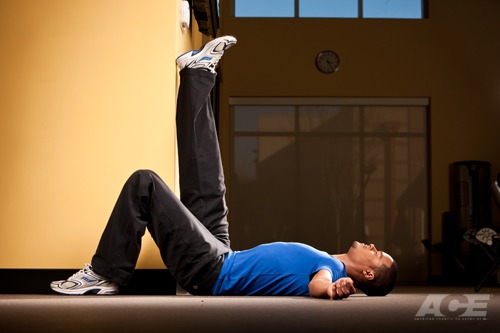
Hamstrings: With both knees bent, extend one heel up to the ceiling, stretching hamstring. Circle ankles clockwise, counterclockwise. Repeat opposite side.
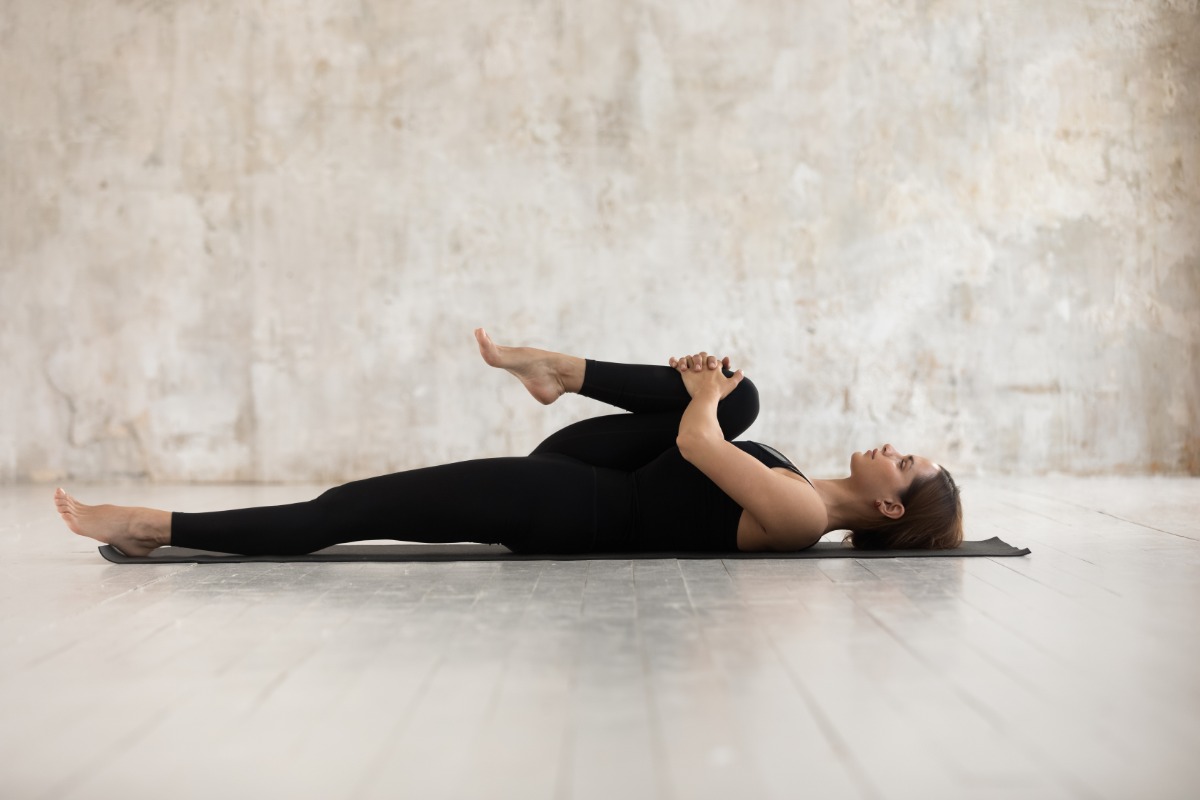
Hip Flexors: Draw right knee up to shoulder, hooking right hand or elbow under right knee, stretch out left leg onto bed, extending heel away from you. Stretch left arm over your head. Repeat opposite side.
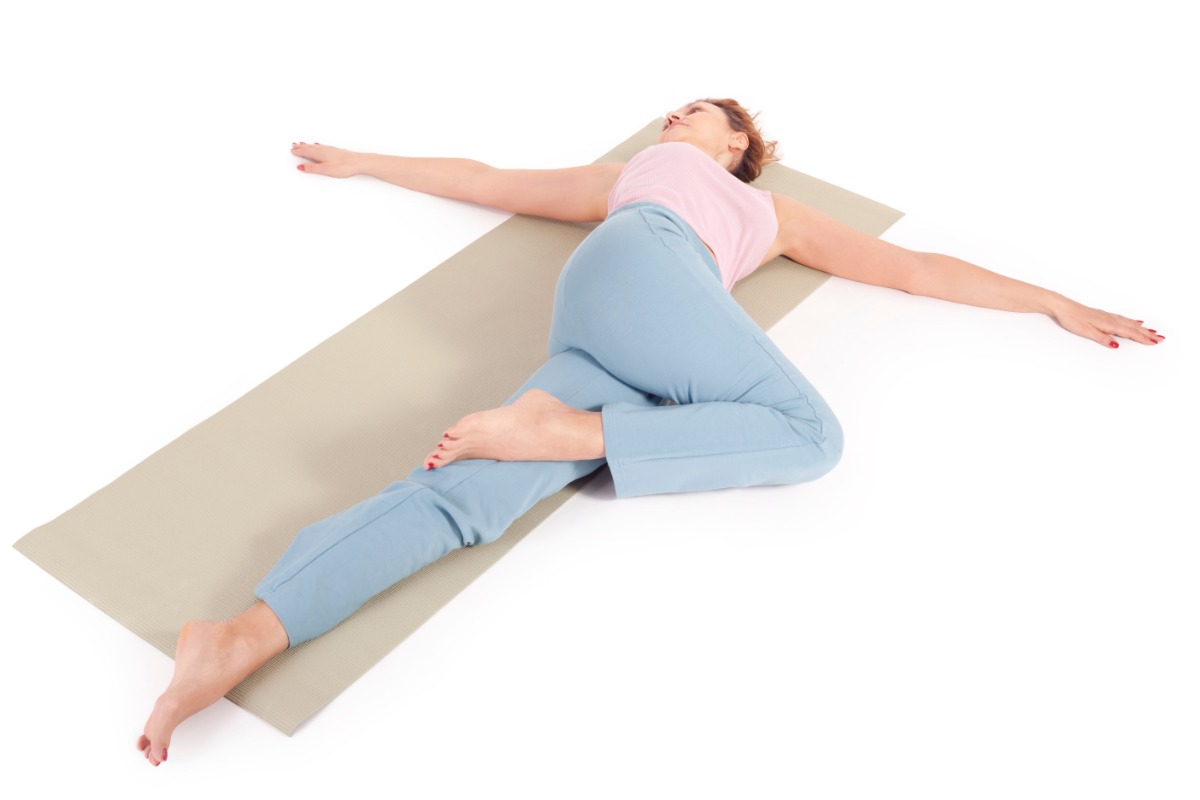
Lowerback/Hips: With arms outstretched in “T” position, draw knees up to chest. Let knees fall toward left armpit, anchoring opposite shoulder onto mattress/floor. If you like, place pillows between or under either side of your legs for comfort. Repeat opposite side.
Pelvic tilting to warm up your lower back:
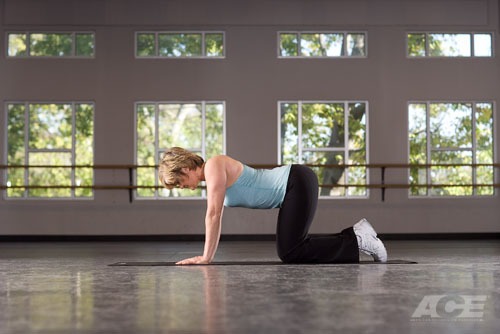
Pelvic Tilt Hands and Knees: Roll over onto all 4’s. Exhaling, tuck your tailbone, drop your head and round your back into Cat pose. Inhaling, lift the sitting bones, open your chest toward your chin, allow your spine to arch slightly into Dog pose. Repeat 3 or 4 times. Move smoothly, developing play in the spine.
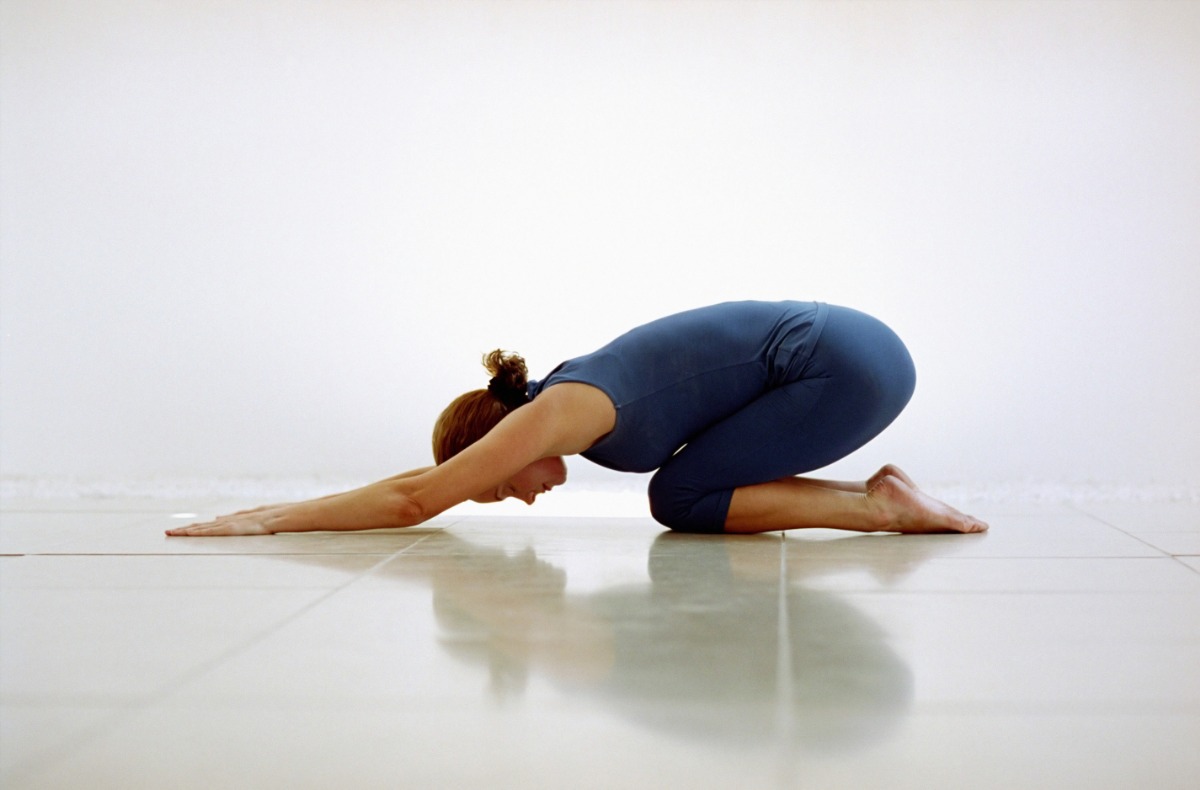
While on all 4’s, move a pillow under your chest, with knees apart, sit back towards your heels in Childs pose. Rest your forehead on pillow or folded arms, or outstretched arms. Feel the weight of your tailbone over your heels
Repeat Cat and Dog with hands on knees (baseball stance) in shower, warm water on back. Twist gently to right as you look over right shoulder, repeat left side.
Now you’re ready to get vertical!
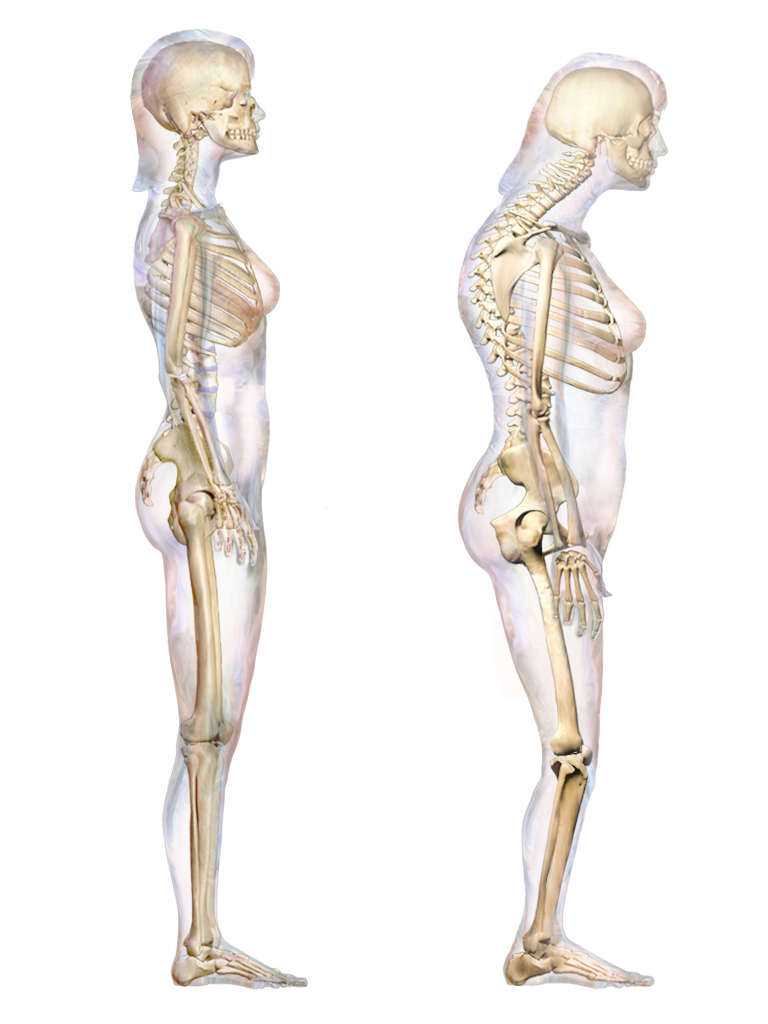
In Chapter One, we discussed the connection between sedentariness and chronic back pain. A case was made for getting oxygen pumping through your body with aerobic exercise, and strengthening your core to support your skeleton. The best time to treat chronic back pain is before it begins! What role does your posture play in mitigating back pain? An important one. Your spine is composed of 33 individual stacked vertebrae, with three natural curves. There is a lot of flexibility but no rigidity without the musculature encasing it and keeping it erect. The muscles on either side of the spine are the erector spinae.Think of the daily work load expected of your spine–carrying cargo that includes all the internal organs, a head which is the weight of a bowling ball, and at least half the weight of the human body. We carry this load around 24/7, walking, running, twisting, turning, bending, reaching…The spine is designed to bend forward and back (flexion and extension), move laterally from side to side, and rotate (twist) both directions. Standing or sitting for prolonged periods, hijacks what the spine was designed to do for us, which is move multi-directionally and often! Flexibility exercises jog our muscles’ memory of what they are about.
5.Your spine is composed of how many stacked vertebrae?
Look at the four regions of your spine (see illustration below): Cervical (neck), thoracic Upper back), lumbar (lower back) and sacrum (tailbone). Overly tight or inactive muscles will alter the cervical, thoracic and lumbar curves. How do you keep your spine working optimally for you?
1) Basic kinesthetic awareness: Assess your posture – If you were to hang a plumb line and stand next to it, your ear, shoulder, hip and knee and ankle would be in alignment. Too much thoracic curvature and your ear will be in front, too much lumbar curvature and your hips will be behind. the plumb line. Take a moment and to the best of your ability or with the help of a friend, assess your posture in a mirror. Whatever postural weakness you have, will be exacerbated when walking, running or playing.
6.Assess your posture: Standing next to a mirror or with the help of a friend, assess your posture. Based on your imaginary (or actual) plumbline, what do you observe about your posture? Explain in 2-3 sentences.
2) Mountain Pose: In yoga, the posture called mountain pose gives you great awareness for good posture. Try this: Stand barefoot with your feet hip width apart, weight evenly distributed between toes and heels, lifting through your arches, knees soft (not locked), belly relaxed, sternum (chest) lifted, shoulders relaxed, arms loose. Does this change the posture you began with?
7.In 2-3 sentences, note what corrections were needed with your posture, or what you observed.
3) Supple spine: Time at your desk, driving, lifting kids and perhaps work related duties tend to exacerbate thoracic curvature referred to as kyphosis. Excessive lower back arch or lordosis can be addressed with this stretch.
4) This Static Stretch will relax and mildly stretch all the erector spinae muscles and provide wonderful relief. Lay down, with knees bent at 90 degrees over a chair or table. Feel the weight of both shoulders and both hips sinking into the floor. Take several deep breaths and relax for 10 minutes. If you find this is really hard to do, you may need it for the relaxation effect as much as for the spinal traction.
Foam Rollers and Fitballs:
In the mid 90s, two wonderful tools became ubiquitous in fitness studios and gyms: fitballs and foam rollers. Currently fitballs are just as handy as a desk chair as they are for flexibility and core strengthening. Can you stretch in bed, on the floor, in a chair, on the grass or in a pool? A resounding yes! What both these tools offer are variations, therapeutic pressure on muscles, balance and fun.
Foam Rollers: A reliable benefit that flexibility studies support is reducing muscular tension. One can spend thousands of dollars on massages, or even more on a state of the art massage chair to alleviate stress and sore muscles. Human touch massage has amazing therapeutic benefits when available. A physical therapist, athletic trainer, or massage therapist will apply direct pressure to knots, or small nodules in the skeletal muscles beneath the skin. This type of therapy is referred to as myofascial release (Travell et al, 1983) For far less money, and available daily, is self-myofascial release (SMR) on a foam roller. Your own body weight is used to exert pressure on trigger points, areas that need release. Read the blog below, if possible participate with any ball or roller you have, then answer the 5 questions.
Fitball: As mentioned earlier, one of the best uses for a fitball is substituting it for a chair at your desk. Instead of sitting in a rigid, static position, exacerbating bad posture, sitting on a fitball encourages movement e.g. pelvic tilts forward and back, or side to side. Additionally, inserting gentle back bends over the ball, to counteract kyphosis and recalibrate posture, keeps the oxygen flowing through the spine! The most important thing about a fitball is keeping it where you will use it, not in a closet!
Fitball Guidelines
The fitball originated in the early 1970s in Switzerland where it was used in therapeutic exercise programs by physical therapists. Now the ball is widely popular in fitness programs—Besides toning strengthening and flexibility benefits, Fitball improves balance, core stabilization and posture.

1) It’s recommended you obtain clearance from your physician before starting any new exercise program.
2) Select a ball according to your height:
|
Height |
Size |
|---|---|
|
Under 5′ |
45cm |
|
5′ to 5’7″ |
55cm |
|
5’8″ to 6’2″ |
65cm |
|
Over 6’3″ |
75cm |
3) Ball should be inflated until very firm—instructions on box.
4) When sitting on the ball, hips and knees should be flexed at 90*. Center of gravity should be slightly forward of the center of the ball. Hold the ball lightly with both hands at sides of ball for better balance. Stay in contact with ball at all times.
5) Use ball in an area unobstructed by furniture etc. To keep the ball more stable roll up two bath towels and place them parallel with the ball between the towels.
6) Warm up rhythmically at least 5 min before using the ball (unless doing fitball warm up). Select one exercise for each body part. Move at a slow, controlled pace throughout entire range of motion of each exercise. Breathe normally or exhale on exertion. Concentrate on proper body alignment when performing each exercise.
7) Stretches should be held 15-30 seconds with 1-2 reps. All other exercises should be performed in 1-2 sets of 8-15 reps.
8) To progress, gradually increase the number of reps and/or sets, or do level 2 variations. Keeping the feet further apart will increase stability while placing feet closer together will make the exercise more challenging in most cases. To maximize benefits, exercises should be done every other day.
9) Pregnant women or participants with high blood pressure, heart problems, arthritis, or joint injuries should get a physicians approval before using the ball.
Fitball 101 Warm Up
Stretches should be held for several deep breaths, listen to your body….
—Pelvis Tilt: Sitting on ball, neutral pelvis, tilt pelvis fwd/back. Begin exaggerating the move with arms fwd, hands clasped as you roll onto tailbone, hands on knees. Now alternatively, sit up tall on ball, heels lengthen into floor as you extend sit bones behind you.
–Tilt pelvis side to side, lifting one cheek then the other. Circle the pelvis clockwise, counter-clockwise
–Progress into backbend on the ball, with hands supporting neck, easing spine into backbend from lower spine, then moving up to shoulders/neck. Add arms to side or overhead. Roll onto side, stacking hips/shoulders, head resting on shoulder, Repeat other side.
–On back, lower hips, draw chin to chest, walk feet in to upright sitting position. Continue walking feet back into fwd bend, chin resting on ball, sacrum sinking toward floor.
Walk hands to one foot, then other. Stretch legs out to split position, toes pointing fwd. Sacrum sinks,
arms counterbalance with hands on floor.
–Draw knees back toward floor, kneeling in childs pose (sitting on heels). Hands at 10 and 2 on the ball, if tight shoulders, lower hands. Roll ball side to side for lat stretch. Chin on chest, roll ball toward body, kneeling on knees. Step fwd with one foot into low lunge, opposite knee on floor, chest lifted, ball inside bent knee. Repeat opposite side. Finish with childs pose/lat stretch.
Guidelines for Maximum Flexibility: (breathing, ballistic, dynamic vs static, pre or post workout, reducing soreness increased ROM
Warm up: Often young athletes are trained to stretch before a workout, however research supports that stretching is more effective on a warmed up body. Be it a short walk or some calisthenics, heat allows the joints to move more easily and have increased range of motion. As heat increases, muscle tissue elongates, reinforcing the best time to stretch extensively is after a workout. This provides a good cool down time.
Repetitions: The number of times a particular stretching movement is held (if a static stretch) then repeated, is a repetition. Studies have discovered the greatest change in muscle length occurs during the first four attempts. Stretching beyond the fourth repetition didn’t result in significant increases in length (Taylor et al, 1990)
Intensity: How hard do you stretch? The old adage “No pain, no gain” does not apply to stretching! It’s very subjective because stretching most likely will produce some discomfort, however pain is not the goal. Studies suggest that for increased range of motion a muscle should be stretched 10% beyond its’ resting length. “Pushing your personal envelope” but not exceeding it can be a good rule of thumb. Most importantly, never let someones else’s flexibility (e.g. in a yoga class) be your gold standard.
Time: How long should a particular stretch be maintained or held? When testing hamstring flexibility, a telling study indicated there was no significant difference between groups stretching for 30 versus 60 seconds (Grady & Saxena 1991) Longer stretching duration seemed to benefit a 65 and older population, however the general prescription for college age individuals is 30 seconds.
Frequency: For our benchmark we will refer to the American College of Sports Medicine, which recommends stretching five or six times a week for flexibility training (ACSM, 2009). Does optimal stretching require a yoga mat, an all encompassing routine or your workout clothes? NO! It’s not all or nothing, it’s something or nothing. Short, periodic stretching breaks throughout your day will have a compound effect on your range of motion, posture and delayed muscle soreness.
Breathing: Like strength training, one should breathe into the effort, or exhale on the exertion. Breathing in a slow rhythmic manner facilitates a relaxation response, which enhances range of motion.
What’s next: Hopefully by now you’ve expanded your repertoire of stretches and perhaps tried the bed series, or using a roam roller or a fitball. Like your aerobic fitness and strength training, your flexibility will serve you well, the more you tend to it and make it a habit. You have control over it. Take a bit of time before you get vertical, after a warm up, post workout, or sitting at your desk. Let it enhance your joy of movement, help you stand taller, and promote relaxation.
8.What will your stretching routine look like following reading this chapter? Outline a new routine that you’ll try in 2-3 sentences.

0 comments