

- Explore the leaves in Figure 12. Observe the various shapes and structures of the leaves. In particular, observe whether the edges of the leaf are smooth or ridged.
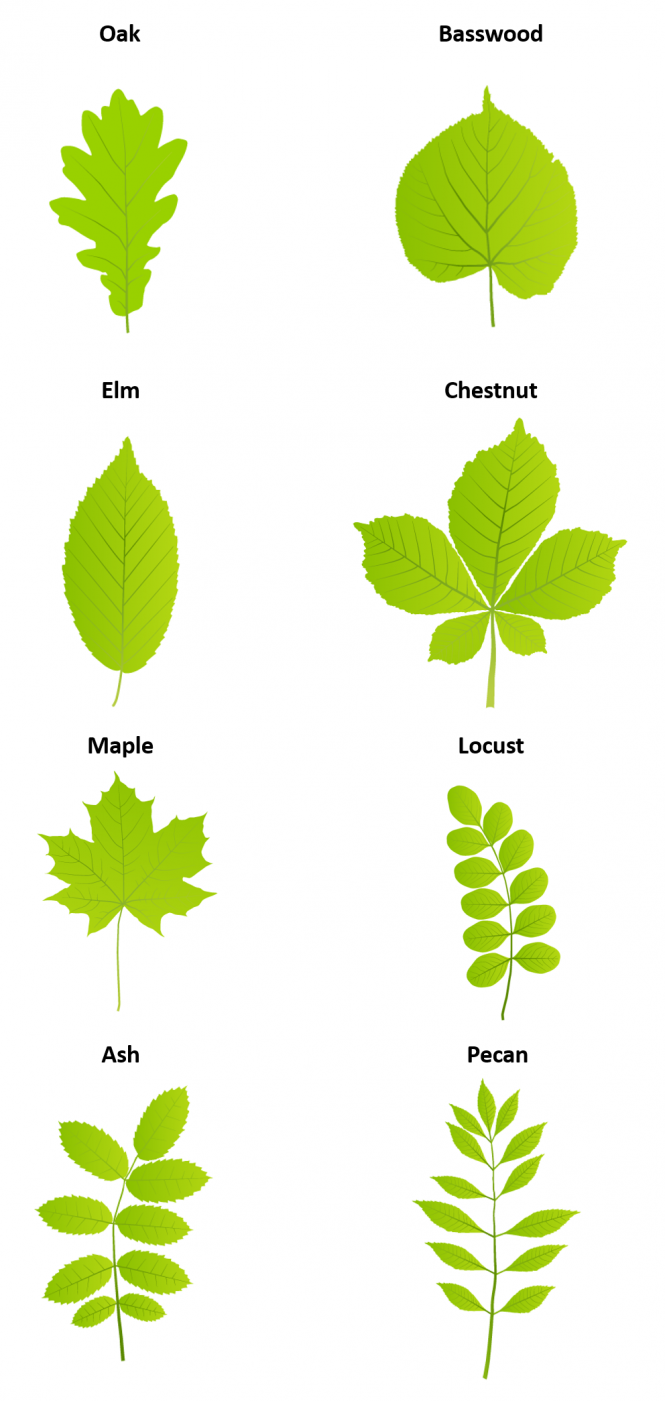
- Print a color copy of the Leaves Supplemental Document that contains the 8 leaves shown in Figure 12.
- Describe the main features of each of the leaves in Data Table 2.
- Look at the descriptions in Data Table 2 and consider which characteristics are shared and which characteristics are unique, and may be used to differentiate between the leaf types.
- Create a dichotomous key that may be used to identify each leaf type. Use the descriptions in Data Table 2 to guide your thoughts. Record your dichotomous key in Data Table 3.
Note: The data table may contain more rows than you need depending on how your key is written.
- Check your work. Ensure that each of the 8 leaf types are listed only once in Data Table 3. Ensure that for each couplet, 1, and only 1, description will always be true.
- Pretend as if you did not know the names of the leaves provided in Figure 12. Practice using the dichotomous key you created to classify the leaf types.

0 comments